01
Start with customer value
What outcome matters, and how will we know we delivered it?
Define quality, delivery, cost, safety, and reliability measures before choosing a tool.
Lean helps teams remove work that does not create customer value. Six Sigma helps them understand and reduce variation in process results. Robustness Thinking™ asks how to make a product, process, or organization less sensitive to the variation that remains. Together, they improve performance and help sustain it across different people, inputs, workloads, environments, and time.
Leading with Robustness™ connects strategy, improvement, and design in one learning cycle. We define the value that matters, study the current system for waste, variation, and gaps, then improve an existing process or design a new solution. We test how it responds to realistic change, and use operating evidence to strengthen it over time.
Leading with Robustness™ offers three connected programs. Leaders can align Operational Excellence with business priorities, teams can improve existing processes through Lean Six Sigma, and designers can build quality and reliability into new solutions through DFSS. Every program considers how variation affects performance and concludes with a practical 90-day action plan.
The Leading with Robustness™ pathway turns learning into a focused 90-day pilot. Your team selects a meaningful challenge, establishes a trustworthy baseline, and chooses the right improvement or design route. We then test performance under the conditions the system will actually face and use the evidence to decide what to adopt, strengthen, or scale.
RSTI provides consulting and training to organizations seeking to improve their business processes and performance.
Our distinct approach integrates quality and business management systems to help improve your bottom line cost savings and business growth. By focusing on the improvement of processes on both a strategic and tactical level, RSTI enables clients to achieve extraordinary, ongoing financial benefits through increasing customer satisfaction improvement, encouraging value creation and innovation, eliminating waste, improving cycle times, reducing variation, improving quality, and strengthening corporate cultures.
RSTI Peer Review System
Lean Six Sigma
Design for Six Sigma (DFSS) with Lean Product Creation Principles
TRIZ (Theory of Inventive Problem Solving)
Axiomatic Design
Robust Engineering
Concept Design · Parameter Design · Tolerance Design
Improvement Implementation Approach
Assessment, Strategic Plan, Execution and Transition
ROBUSTNESS
Robustness is a feature in many systems, natural and artificial alike. We investigate robustness from a perspectives of bus system and its application in modern environments. A focus investigates the relevance and importance of robustness in a discipline where many techniques are inspired by problem-solving strategies found in nature—artificial intelligence. The importance of robustness as a ‘principle’ cannot be underestimated. For instance, reliability, availability, safety, and security are important requirements in many systems.
COMPANY POLICIES
Robustness is essential for higher quality, reliability and ultimately customer satisfaction at the lowest cost. The most important thing is to know how to create a robust design and how to turn it into a repeatable long-term process.
EXECUTIVE PROFILES
RSTI service includes a comprehensive consultation of product and service to help identify gaps and opportunities in quality, reliability and safety, a comprehensive report that includes solution proposal, a project plan with timelines and milestones, a cost analysis, and a schedule. We also offer a suite of quality products that will help you get there quickly, efficiently and smoothly. That’s how we ensure your success.

Tell us whether you are improving an existing process, developing a new design, or building an OpEx leadership capability—along with your team, timing, and the challenge you want to address. We can discuss which program fits your organization.
Create value. Improve flow. Engineer dependable performance.
Leading with Robustness™ connects Operational Excellence, Lean Six Sigma, and Design for Six Sigma through one guiding question: Will the value we create hold up under real-world variation?
Operational Excellence aligns improvement with customer needs. Lean Six Sigma strengthens existing processes. Design for Six Sigma builds quality into new ones. Robustness Thinking™ brings them together by reducing the system's sensitivity to change.
Explore the Principles01
What outcome matters, and how will we know we delivered it?
Define quality, delivery, cost, safety, and reliability measures before choosing a tool.
02
Which steps consume time or resources without improving the outcome?
Map the value flow and remove avoidable waiting, movement, rework, or handoffs.
03
Where and when do results differ, and what drives the difference?
Compare performance across shifts, material lots, equipment, demand levels, and operating conditions.
04
Which factors can't be fully controlled, and how can the system perform well despite them?
Change a design, operating window, control, or recovery path so a small input change doesn't cause a large performance loss.
05
How will we detect problems early and feed what we learn back into improvement and design?
Combine mistake prevention, meaningful measures, frontline observations, and engineering feedback.
06
Does the result hold after the pilot and under real operating conditions?
Review capability, defects, flow, and reliability at agreed intervals, and adjust when conditions change.
Example · Reverse supply chain
Lean reveals repeated handling and waiting between assessment and disposition. Six Sigma shows that cycle time and decision accuracy vary by product type and shift. The team improves the workflow, then asks: will the new process still meet its targets when return volumes surge, product mix changes, or experienced staff are unavailable? Standard decision criteria, flexible capacity, clear escalation, and monitoring help preserve the gain. Removing steps creates efficiency; building capability keeps the process reliable under stress.
An improvement is complete when it creates value in practice and continues to perform as conditions change.
At every stage, ask: what changes?
Which changes cause the greatest loss of value, and what can we change in the system to reduce that loss?
What matters to customers and the organization?
Operational Excellence aligns customer needs, strategy, and the improvement portfolio.
Where do waste, delays, defects, and variation arise?
Value Stream Mapping and Lean Six Sigma establish the baseline and identify causes.
Are we improving an existing process or creating a new solution?
What changes in real operation, and how sensitive is performance to it?
Robustness Thinking™ guides variation analysis, experiments, design choices, controls, and mistake prevention.
Does performance hold across conditions and over time?
Operating measures, frontline feedback, and reliability evidence feed the next decision at stage 1.
Sets priorities and sponsors the pilot
Who it is for
Executives, functional leaders, and transformation sponsors.
The challenge
Many improvement ideas compete for attention, but priorities and ownership are unclear.
What you leave with
A prioritized opportunity portfolio, measures of customer and business value, named owners, and a 90-day pilot plan.
Your 90-day pilot
A priority pilot with a named owner and agreed success measures.
Carries out the pilot on an existing process
Who it is for
Operations, quality, supply chain, and process improvement teams.
The challenge
Delays, rework, defects, or inconsistent performance persist in a process already in use.
What you leave with
A current-state value stream map, baseline measures, analysis of waste and variation, and a tested improvement plan.
Your 90-day pilot
A Lean Six Sigma improvement pilot, stress-tested against real variation.
Carries out the pilot on a new design
Who it is for
Product, process, engineering, and reliability teams.
The challenge
A new design must meet customer requirements across changing conditions and over time.
What you leave with
Critical customer requirements, a variation and risk map, candidate design concepts, and a verification plan.
Your 90-day pilot
A DFSS design pilot, tested across realistic operating conditions.
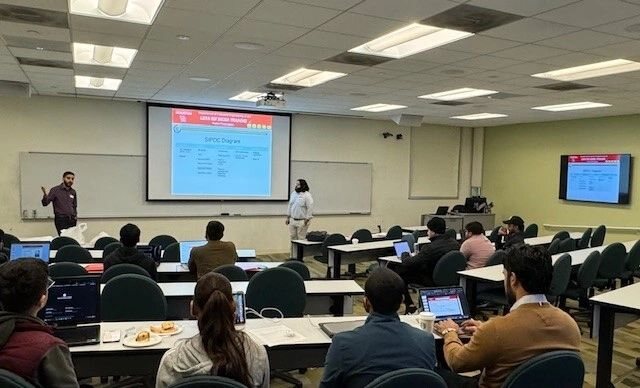
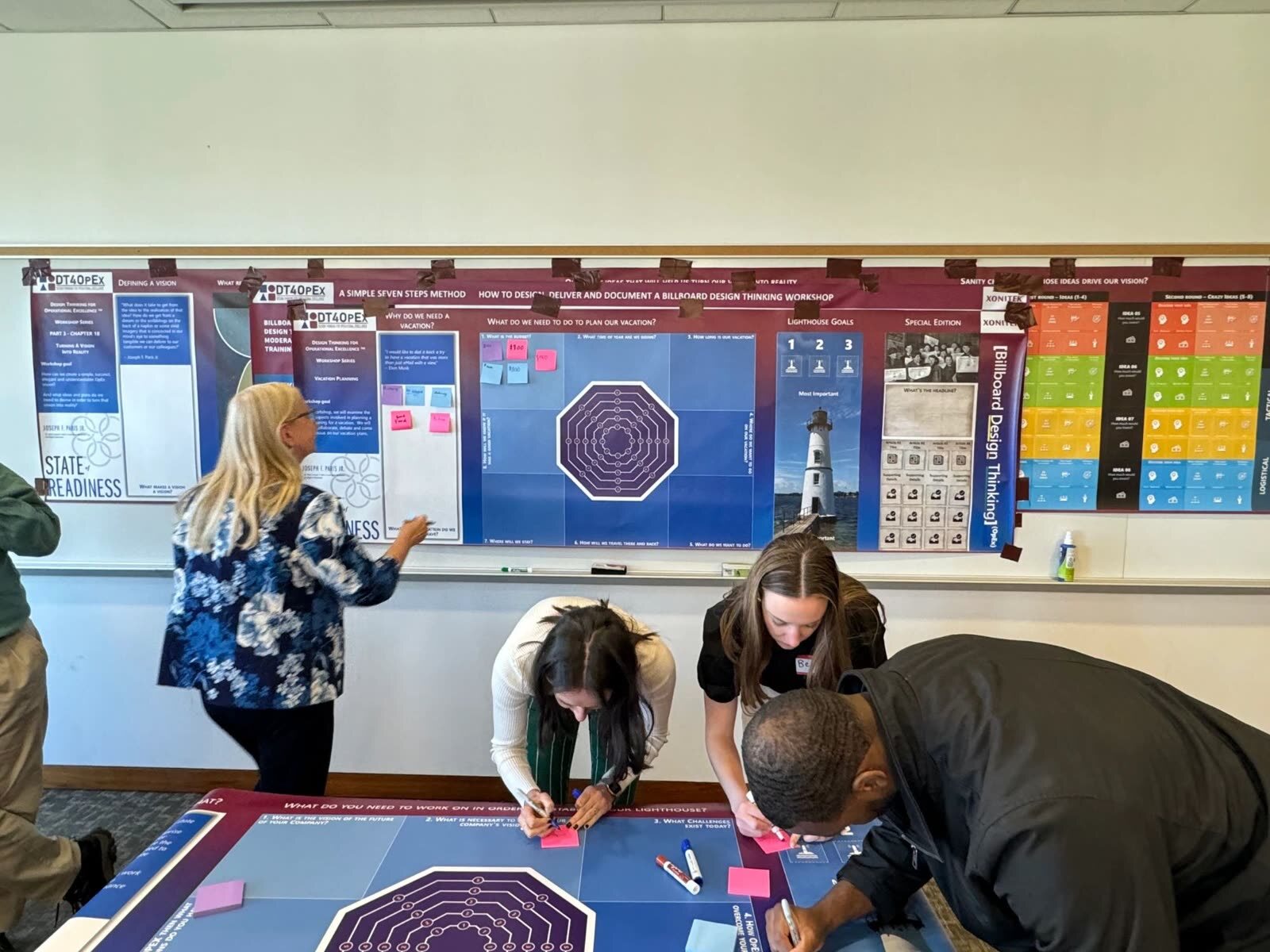
Workshop · days 1–15
Select one problem tied to customer value and a business priority. Name the sponsor, owner, team, scope, and desired result.
Output: a one-page pilot charter.
Days 15–30
Map the current value flow or define the new design's requirements. Check that measures and data are usable. Identify likely sources of variation.
Output: a baseline and an initial variation and risk map.
Days 30–45
For an existing process, investigate causes and select a Lean Six Sigma improvement pilot. For a new or redesigned solution, translate customer needs into a DFSS design pilot.
Output: an agreed pilot design, test plan, resources, and decision criteria.
Days 45–75
Run the improvement or evaluate the design. Test the conditions most likely to affect performance: volume, inputs, operators, equipment, environment.
Output: results against the baseline, including under relevant variation.
Days 75–90
Review the evidence with the sponsor. Adopt, adjust, expand, or stop. Assign controls, monitoring, and follow-up.
Output: a decision record, sustainment plan, and next-stage roadmap.
Lean Six Sigma route · improve what already exists
A team targets return-processing delays. It maps the current flow, measures cycle time and rework, tests the main causes, and pilots a revised process. Its robustness test: does the gain hold across shifts, product types, and demand peaks?
DFSS route · design for future requirements
A team develops a new inspection process. It defines customer and operational requirements, compares concepts, and tests how sensing accuracy and throughput respond to changes in parts, lighting, equipment, and workload before deployment.

Design for real conditions
Translate customer needs into requirements, test sensitivity to variation, and use operating evidence to strengthen lifecycle reliability.
The challenge
A design meets its target in a controlled test but performs inconsistently across environments, users, or component tolerances.
What we examine
Performance spread, failure rate, reliability over time, recovery behavior, and customer impact.

Sustain quality and flow
Remove waste, reduce process variation, and build operations that maintain performance across shifts, inputs, equipment conditions, and demand levels.
The challenge
A process meets its target on one line or shift but produces rework, downtime, or inconsistent output elsewhere.
What we examine
First-pass yield, cycle time, rework, downtime, process capability, and cost of poor quality.

Make complex flows more resilient
Reveal delays and rework, improve decisions, and test whether gains hold when volumes, product mix, and capacity change.
The challenge
Returns, repairs, or fulfillment decisions slow down as product mix, volume, or available capacity changes.
What we examine
Turnaround time, throughput, decision accuracy, labor productivity, inventory, and return on investment.
Featured example · Reverse supply chain
Value Stream Mapping identified delays and non-value-added activity. Lean Six Sigma guided process improvement. Digital Twin and AI Agent work supported assessment and decisions, and performance was evaluated against operational and business measures.
Whether the work begins in design, on the factory floor, or across a supply chain, the question is the same: how do we create value that continues to hold under changing conditions?
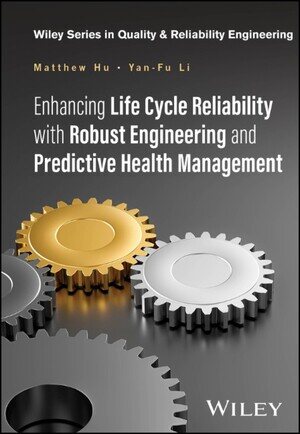
The thinking behind the practice
with Robust Engineering and Predictive Health Management
Published by Wiley
Explore how robust design and predictive health management work together to strengthen reliability—from early engineering decisions through a product’s life in the field.
Oct 22, 2026
10th OpEx & Business Transformation Summit
Matthew Hu, Director, Engineering Management Program, Industrial and Systems Engineering, University of Houston. How digital twin, AI agents, and agentic AI can improve reverse supply chain operations while sustaining Operational Excellence.
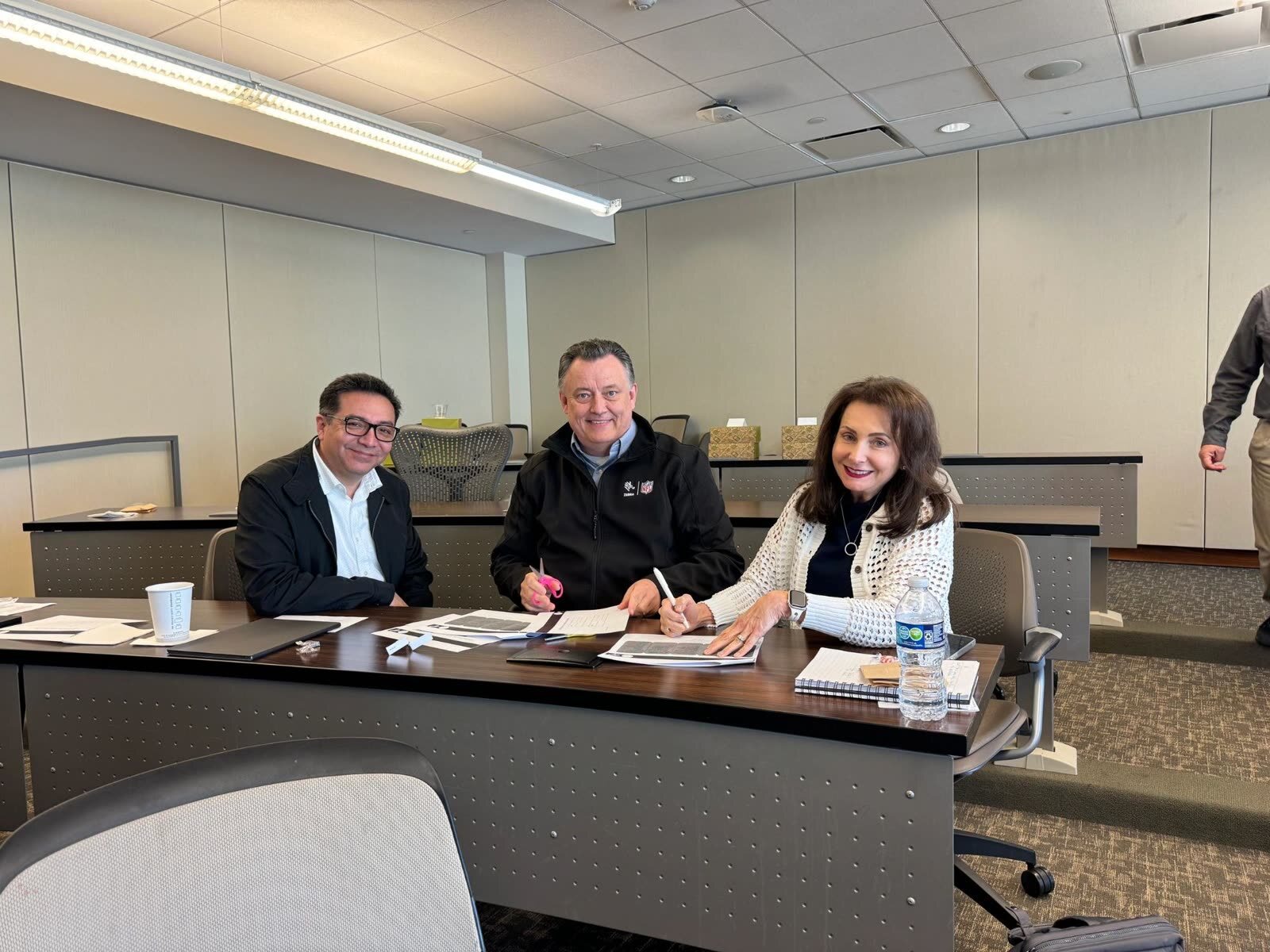
Register for the summitDiscuss the customer complaints as a group, then drop the provided helicopter from different heights and angles and note the inconsistencies.
Frame the problem: how might we design a helicopter that spins consistently, however the angle it is held? Write a clear problem statement.
Brainstorm solutions. Think about shape, size, balance, and weight distribution, and sketch designs to test.
Create at least two prototypes with scissors and tape, balancing weight and adjusting blade size or shape. Document each change.
Drop each prototype from a fixed height. Record spin, stability, and sensitivity to drop angle, time the fall, then compare results as a group.